
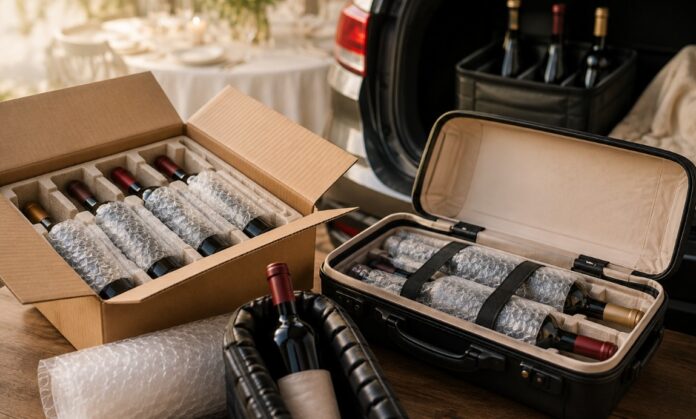
Wine can be an important part of a special occasion. A carefully selected bottle might be intended for a wedding toast, an anniversary dinner, a milestone birthday, a family gathering, or another celebration that has been planned months in advance. In some cases, the wine itself may have sentimental value, especially if it has been stored for years waiting for the right moment.
Transporting wine safely requires more care than putting a few bottles in the car and setting off. Glass bottles can break, labels can become damaged, and excessive heat or cold can affect the wine. If you are transporting an entire collection or several cases for an event, organization becomes even more important.
A little preparation can help your bottles reach their destination safely and in good condition.
Start With the Right Packaging
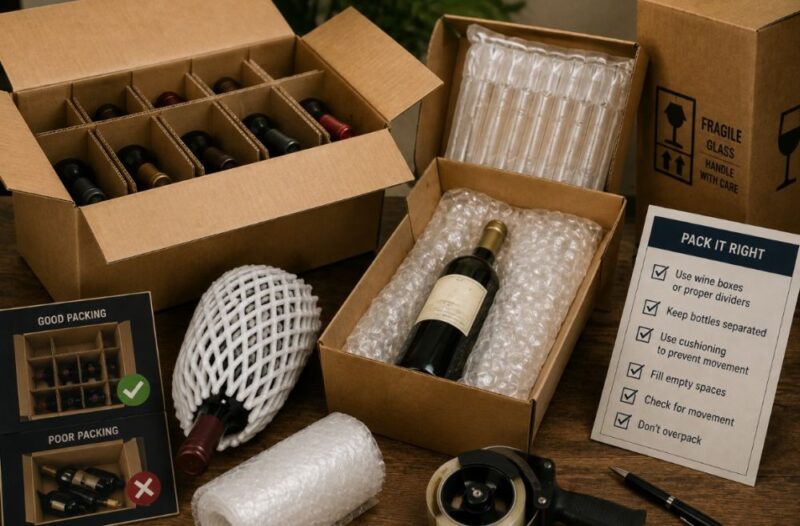
Secure packaging is one of the most important considerations when moving wine. Bottles should not be able to roll around, collide with each other, or strike the sides of a box during transportation. Purpose-made wine boxes are usually preferable to standard cardboard boxes because they contain compartments designed to keep bottles separated. Inserts, dividers, molded packaging, and bottle sleeves can provide additional protection.
If there is empty space inside the box, use suitable cushioning material to prevent movement. Once packed, gently check whether anything shifts when the box is moved. If bottles are still moving around, additional padding may be needed.
Avoid overloading boxes simply to reduce the number you need to carry. A box containing too many bottles can become extremely heavy, making it more difficult to lift safely and increasing the risk of the bottom giving way.
Pay Attention to Temperature
Wine is sensitive to its surroundings, and extreme temperatures should be avoided wherever possible. One common mistake is leaving wine inside a parked vehicle for an extended period.
On a warm day, the temperature inside a vehicle can rise considerably. Extended exposure to excessive heat may negatively affect wine, while very cold conditions can also create problems. Temperature fluctuations are another reason to plan transportation carefully.
For a relatively short car journey, this may simply mean loading the wine shortly before leaving and taking it inside as soon as you arrive. Longer journeys may require insulated containers or transportation where conditions can be managed more effectively.
If the bottles are particularly rare or valuable, maintaining suitable conditions should be a priority rather than an afterthought.
Decide How the Bottles Will Travel
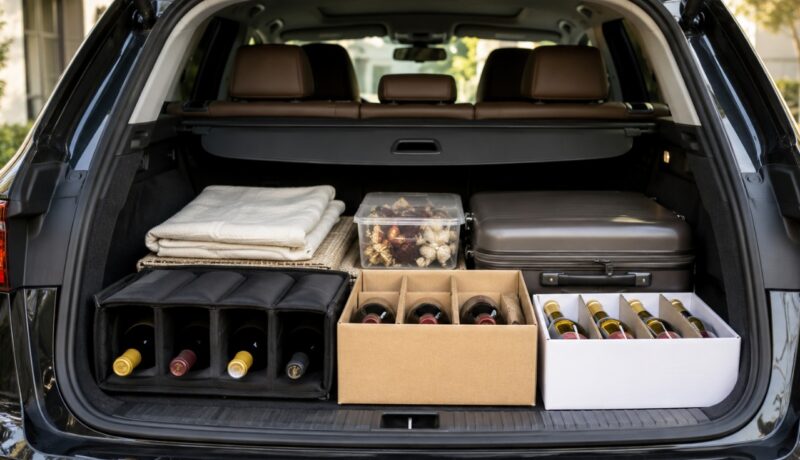
How bottles are positioned and secured during the journey can make a significant difference. Boxes should be placed somewhere stable rather than balanced on seats or stacked where they could fall when the vehicle turns or brakes.
Avoid putting heavy luggage, event equipment, or other boxes on top of wine cases. Even if the outer packaging looks strong, unnecessary weight can damage the box or its contents.
Think about the order in which the vehicle will be unloaded too. Wine that needs to be removed first should not be buried beneath decorations, suitcases, furniture, or catering equipment.
Plan Longer Journeys in Advance
Transporting wine across town is relatively straightforward, but longer distances introduce additional considerations. Before departure, think through every stage of the journey.
Consider where the bottles will be kept during overnight stops, how many times they will need to be moved between vehicles, and whether somebody will be available to receive them at the destination.
For larger quantities, professional transportation can sometimes make the process easier to manage. Services available through platforms such as Shiply shipping services can be considered when arranging transportation, particularly when bottles or other event items need to travel a significant distance.
Planning early also gives you time to consider alternatives if your original transportation arrangements are unsuitable.
Give Valuable Bottles Extra Protection
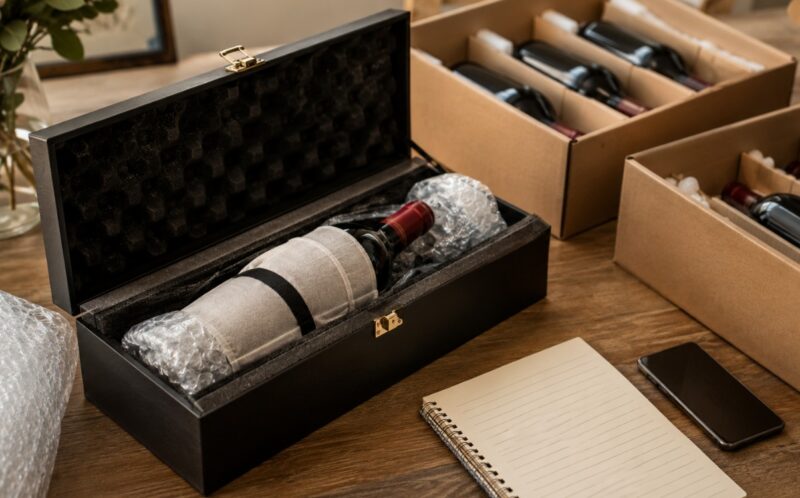
Some bottles deserve additional attention. You might be transporting an expensive vintage, a bottle purchased on a memorable holiday, or wine that has been saved for a particular family celebration.
These bottles may be difficult or impossible to replace, so consider packing them separately with additional protection. Specialist wine packaging can be worthwhile where the contents have significant financial or sentimental value. Photographing bottles before transportation can also be useful. If you are moving multiple cases, create a simple inventory showing what is packed in each box.
Where valuable wine is being transported professionally, check what protection or insurance applies. Do not assume valuable contents are automatically covered without confirming the details.
Protect Labels and Presentation
The contents of the bottle are naturally the main priority, but appearance can also matter at a special occasion. A stained, scratched, or torn label can be disappointing if the bottle is intended to be displayed, photographed, or presented as a gift.
Individual bottle sleeves can help protect labels from rubbing against packaging. Make sure bottles are clean and dry before wrapping them, and avoid using materials that could stick directly to delicate labels.
If presentation is particularly important, inspect the bottles after arrival rather than waiting until immediately before they are needed. This gives you time to deal with minor issues before guests arrive.
Prepare the Destination Beforehand
Safe transportation does not end when the vehicle reaches the venue. Wine needs somewhere appropriate to go once it has been unloaded. Check storage arrangements with the venue in advance. Ideally, bottles should be placed somewhere secure with a reasonably stable temperature and away from direct sunlight or busy areas where boxes could be knocked over.
For weddings and other large events, make sure staff know which bottles are intended for which part of the occasion. Special bottles can easily become mixed in with general event stock unless they are clearly labeled and stored separately. A simple note on each box can prevent confusion without requiring the bottles themselves to be handled repeatedly.
Give Wine Time to Settle
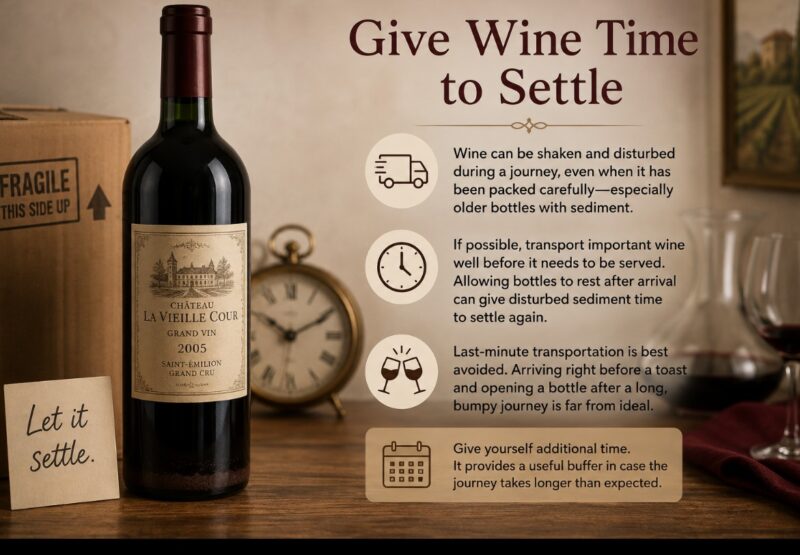
Wine can be shaken and disturbed during a journey even when it has been packed carefully. This can be particularly noticeable with older bottles that have developed sediment. If possible, transport important wine well before it needs to be served. Allowing bottles to rest after arrival can give disturbed sediment time to settle again.
This is another reason why last-minute transportation is best avoided. Arriving at a venue moments before a toast and immediately opening a bottle that has just completed a long, bumpy journey is far from ideal. Giving yourself additional time also provides a useful buffer in case the journey takes longer than expected.
Make Wine Transport Part of Your Event Planning
Special occasions involve plenty of moving parts, and transportation can easily get pushed towards the bottom of the planning list. However, if a particular bottle has been saved for years or you have invested in wine specifically for an event, protecting it deserves some attention.
Start with strong packaging, prevent bottles from moving, avoid extreme temperatures, and think through the complete journey. Give especially valuable bottles extra protection and make sure appropriate storage is ready at the destination.